

Abstract
Oil Extraction Rate (OER) is the core profit indicator of palm oil mills. Regardless of advanced equipment configuration, the ripeness of Fresh Fruit Bunches (FFB) is the decisive factor affecting crude palm oil yield, Free Fatty Acid (FFA) content and refining loss.
This article systematically introduces the four-level ripeness grading standards, accurate technical parameters and corresponding OER ranges of palm fruit. It also provides full-process practical techniques including plantation harvesting, transportation control, sterilization & pressing parameter matching, and data-based management, helping palm plantations and processing factories in Africa and Southeast Asia achieve standardized production, stabilize high oil yield and reduce oil loss.
1. Palm FFB Ripeness Grading, Technical Indicators & OER Standards
In accordance with international palm industry standards and overseas factory data, Fresh Fruit Bunches are divided into four grades: under-ripe, half-ripe, optimum ripe, and over-ripe & spoiled.
1.1 Under-Ripe FFB
Visual Features
Dark green or yellow-green peel; fruits tightly attached to spikelets with almost no fallen fruit; hard and lignified mesocarp with insufficient oil accumulation.
Core Technical Indicators
• Mesocarp oil content: ≤30%
• Factory OER: 14%–18%
• Crude oil FFA: 1.6%–2.8%
• FFB moisture: 22%–25%
Production Impact
Under-ripe fruit is the main cause of low mill oil yield. Early harvesting increases bunch tonnage but greatly reduces effective extractable oil, leading to poor economic benefits.
1.2 Half-Ripe FFB
Visual Features
Partially orange-yellow or light red peel; only 1–4 naturally fallen fruits per bunch; slightly soft mesocarp with uneven ripeness.
Core Technical Indicators
• Mesocarp oil content: 35%–45%
• Factory OER: 18%–21%
• Crude oil FFA: 1.7%–3.3%
• FFB moisture: 19%–22%
Production Impact
Half-ripe FFB is not suitable for mass production. Mixed feeding causes incomplete sterilization, uneven threshing and unstable pressing yield, resulting in fluctuating crude oil quality.
1.3 Optimum Ripe FFB (Commercial Golden Harvest Standard)
Visual Features
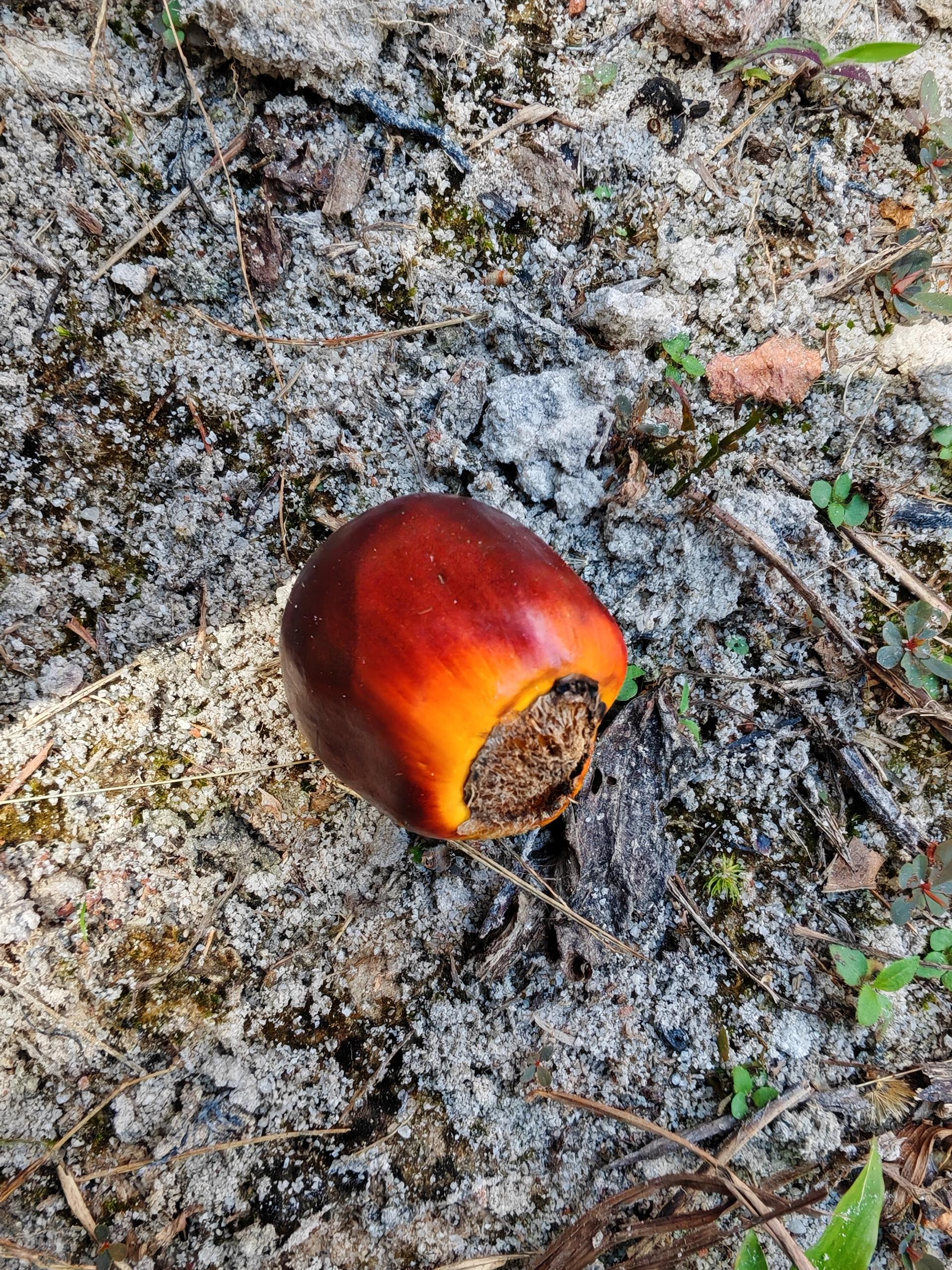
Uniform orange-red and bright red peel; plump and elastic bunches; 5–15 naturally detached fruits per bunch; soft and easily shelled mesocarp without shriveled, moldy or rotten fruits.
Core Technical Indicators
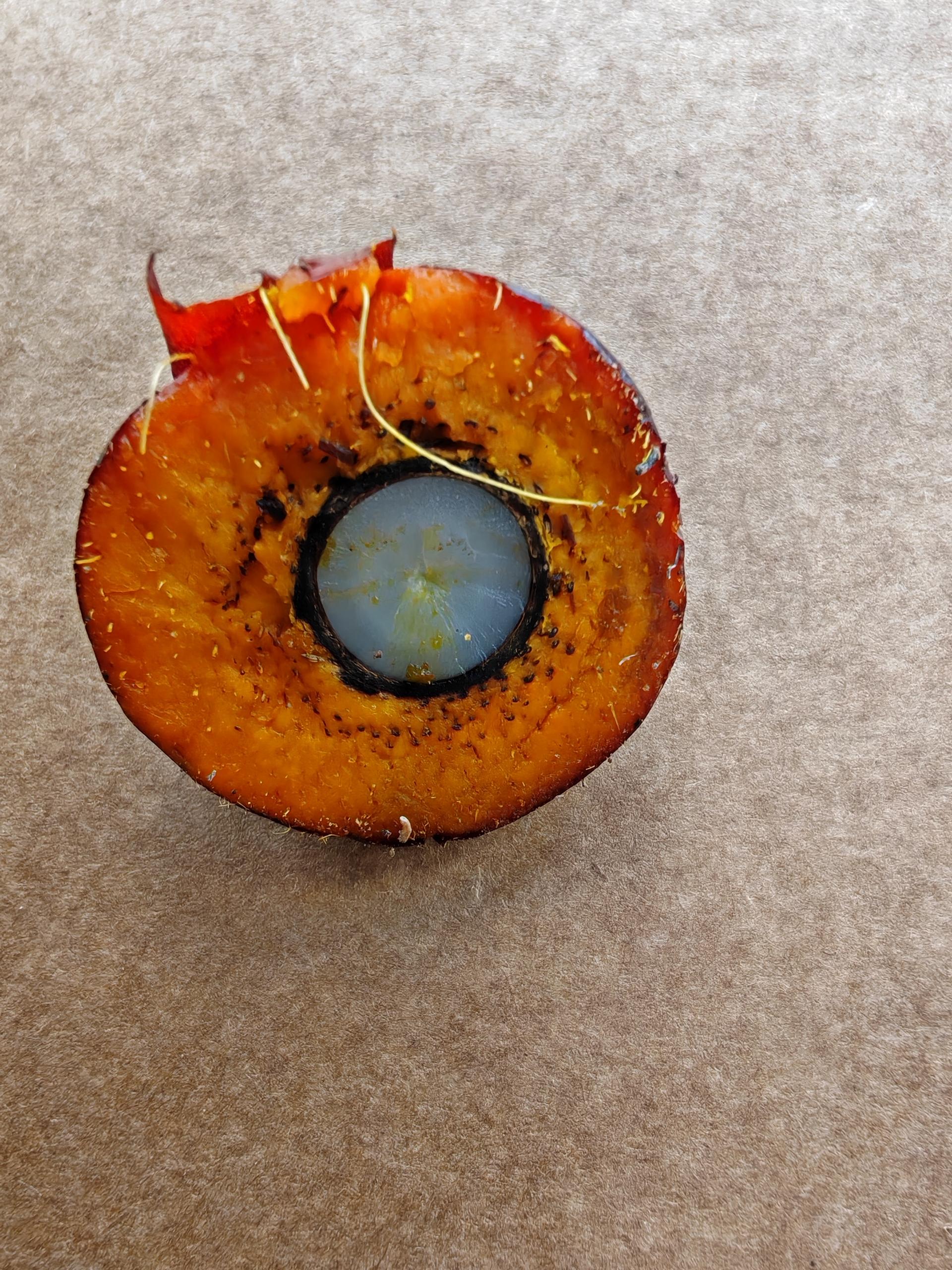
• Mesocarp oil content: 50%–60% (peak oil accumulation)
• Factory OER: 22%–23.5% (industrial high standard)
• Crude oil FFA: ≤3.0% (international qualified standard)
• FFB moisture: 16%–19%
Production Impact
Optimum ripe FFB features maximum oil yield, minimum FFA and lowest refining loss, serving as the only standard raw material for modern palm oil mills.
1.4 Over-Ripe & Spoiled FFB
Visual Features
More than 15 fallen fruits per bunch; large numbers of shriveled, brown and black fruits; partial mildew, rot and deterioration.
Core Technical Indicators
• Mesocarp oil content: 40%–50% (oil loss due to oxidation and enzymatic hydrolysis)
• Factory OER: 19%–21%
• Crude oil FFA: ≥4.0% (seriously out of standard)
• Mold and impurity rate: ≥5%
Production Impact
Oil deteriorates due to oxidative hydrolysis with sharply increased FFA, which raises refining costs greatly. Spoiled fruits pollute the entire batch and cause oil downgrade.
2. Full-Process Practical Techniques for Ripeness Control & Yield Improvement
2.1 Precision Harvesting Control at Source
1. Standard harvesting cycle: Adopt a 10–12 day fixed cycle with the standard of 5–15 fallen fruits per bunch to avoid premature and delayed harvesting.
2. Age-based tools: Use chisels for 4–7-year-old palms to protect petioles and future yield; use machetes for palms over 7 years old for efficient and clean cutting to reduce fruit damage.
3. On-site sorting: Remove green, moldy and rotten fruits on site; prohibit mixed transportation of FFB with different ripeness.
2.2 Transportation & Time-Limit Control (Core of FFA Suppression)
Palm fruit contains active lipase. Broken and bruised fruits trigger rapid oil hydrolysis and rancidity.
1. Golden processing window: Complete sterilization within 24 hours after harvesting; processing within 12 hours achieves the best OER and FFA performance.
2. Peak season priority: Process optimum ripe fresh fruits first; prioritize over-ripe fruits to prevent further deterioration.
3. Sealed transportation: Adopt shaded and closed transportation to avoid sun exposure, rain and long-term open-air stacking.
2.3 Accurate Production Line Parameter Matching
Customize optimal pressing parameters for optimum ripe FFB to adapt to loose mesocarp and high oil release characteristics.
1. Sterilization parameters: Pressure 0.30–0.35 MPa, temperature 135–140℃ to fully soften bunches and improve threshing rate.
2. Two-stage spiral pressing: First stage 8–10 MPa for main oil extraction; second stage 12–14 MPa for residual oil extraction, controlling cake residual oil below 6%.
3. No mixed-grade feeding: Under-ripe fruits cause blockage and high residual oil; over-ripe fruits cause gelatinization and equipment adhesion. Graded processing is mandatory.
2.4 Data-Based Quality Control
Sample each batch to test ripeness ratio, moisture and FFA, establish production records, and dynamically adjust harvesting cycles and equipment parameters to realize standardized plantation-mill linkage production.
3. Common Production Mistakes & Optimization Solutions
1. Mistake 1: Early harvesting for higher tonnage
Early picking of massive under-ripe fruits leads to low OER of 15%–17%, resulting in total oil output loss despite high bunch weight.
Optimization: Unify fallen fruit harvesting standards and assess production by actual oil yield instead of bunch weight.
2. Mistake 2: Raw material stockpiling in peak seasons
2–3 days stacking causes FFA over 5% and 3%–5% higher refining loss.
Optimization: Match daily processing capacity with daily harvest volume, implement batch feeding and batch clearing to avoid backlog.
3. Mistake 3: Fixed equipment parameters for all materials
Unified parameters for all ripeness grades cause unstable yield and high residual oil.
Optimization: Establish graded process templates for differentiated production of ripe, half-ripe and over-ripe fruits.
Conclusion
Palm fruit ripeness is the core source of palm oil mill profitability. Adhering to the standardized harvesting standard of 5–15 fallen fruits, 24-hour fast processing and refined parameter matching is the lowest-cost and highest-return efficiency improvement solution for palm oil mills, which can stably maintain the comprehensive OER at a high level of 22%–23.5% in long-term production.
